The Evolution of Crypto Portfolio UX Design
Discover how crypto portfolio UX design evolved from basic exchange dashboards to institutional-grade, privacy-aware portfolio intelligence systems—reshaping digital asset management, cross-exchange tracking, and secure allocation strategies.
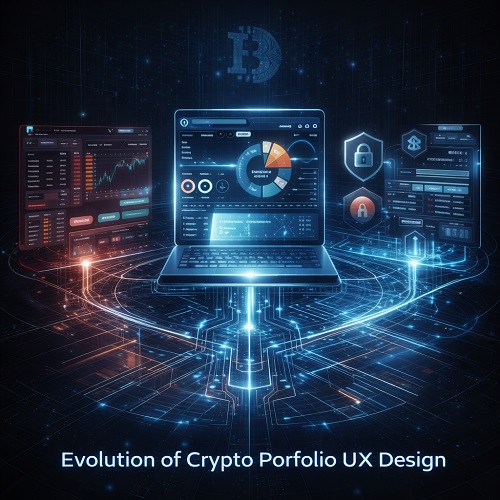
Crypto portfolio UX design has transformed from rudimentary exchange dashboards into complex portfolio intelligence systems. In the early days of digital assets, interfaces prioritized functionality over usability. Today, the evolution of crypto portfolio UX reflects a deeper shift: digital asset portfolio UX is no longer a cosmetic layer but a structural component of capital allocation strategy.
As markets matured, crypto portfolio user experience began to influence risk perception, portfolio tracking behavior, and allocation decisions. The evolution of crypto portfolio UX is therefore not merely aesthetic progress; it represents the architectural redesign of how investors interact with blockchain-based capital markets.
Early-Stage Crypto Portfolio Interfaces: Function Over Experience
Exchange-Centric UX and Fragmented Portfolio Tracking
First-generation crypto portfolio interface design emerged inside centralized exchanges. These dashboards were transaction-focused, emphasizing order books, balances, and execution mechanics. Usability in crypto applications was limited, and cross-exchange portfolio interface integration was virtually nonexistent.
Investors operating across multiple platforms faced UX challenges in cross-exchange portfolio tracking, manually reconciling balances and transaction histories. Portfolio tracking UX lacked cohesion, forcing users to depend on spreadsheets or third-party tools. Information architecture for crypto portfolios was shallow, prioritizing trading activity over holistic portfolio intelligence.
Blockchain UX Challenges in Early Web3 Platforms
Web3 UX design introduced additional complexity. Wallet management, gas fees, seed phrases, and network switching created friction during onboarding experience in crypto apps. Blockchain UX challenges were often technical rather than behavioral, reflecting infrastructure immaturity rather than user-centered design in crypto.
Human-centered fintech design principles were largely absent. Early crypto portfolio user experience assumed technical literacy, creating barriers for advanced retail and institutional participants alike. As capital inflows increased, these usability constraints became structural bottlenecks.
The Rise of Portfolio Intelligence and Data Visualization
From Basic Tracking to Portfolio Analytics UI
As digital asset markets expanded, crypto portfolio analytics UI evolved from static balance displays to dynamic portfolio intelligence interfaces. Data visualization in crypto dashboards became central to risk interpretation, allocation modeling, and performance attribution.
UX optimization in digital asset platforms increasingly focused on clarity, hierarchy, and real-time analytics. Best UX practices for crypto portfolio dashboards began incorporating advanced metrics such as volatility tracking, correlation matrices, and drawdown analysis. Improving portfolio tracking UX for advanced investors required shifting from simple token lists to structured asset allocation views.
Information Architecture and Cross-Exchange Portfolio Systems
Modern digital asset portfolio UX now emphasizes scalable information architecture for crypto portfolios. Multi-account crypto portfolio systems allow users to integrate custodial, non-custodial, and exchange-based holdings into unified cross-exchange portfolio interfaces.
Enterprise crypto asset management solutions introduced layered dashboards that distinguish between operational execution and strategic allocation. Portfolio intelligence interfaces evolved to support advanced analytics, compliance monitoring, and capital efficiency modeling. The shift from fragmented tracking tools to integrated portfolio architecture marked a decisive milestone in the evolution of crypto portfolio UX design.
Institutional Crypto Portfolios and Enterprise UX Standards
Designing Institutional Crypto Portfolio Interfaces
Institutional crypto portfolios demand fundamentally different UX standards compared to retail platforms. Designing institutional crypto portfolio interfaces requires accommodating governance workflows, compliance-driven crypto UX requirements, and institutional digital asset custody transparency.
Risk management dashboards for institutions must provide exposure concentration metrics, liquidity risk indicators, and audit-ready reporting. Institutional portfolio analytics incorporate scenario modeling and stress testing features that go beyond traditional crypto dashboard design. How institutional crypto portfolios manage UX complexity often determines operational resilience.
Institutional-Grade Crypto Infrastructure and UX Architecture
Institutional-grade crypto infrastructure embeds UX directly into governance architecture. Enterprise crypto asset management systems require layered permissions, multi-account crypto portfolio systems, and real-time audit trails.
Institutional crypto portfolios operate within regulated frameworks, making compliance-driven crypto UX an architectural necessity rather than a feature add-on. As a result, crypto portfolio UX design increasingly reflects enterprise standards traditionally associated with institutional portfolio management in legacy finance.
Security-Focused UX and the Role of Privacy Coins
Exploring Privacy Coins for Safer Investments
Exploring privacy coins for safer investments has become a strategic discussion within advanced portfolio allocation circles. Privacy-focused cryptocurrencies introduce enhanced anonymity and transaction confidentiality, which can affect portfolio exposure strategies.
Integrating privacy coins into portfolio dashboards requires transparent visualization of risk factors, regulatory considerations for privacy coins, and potential compliance constraints. Portfolio exposure to privacy coins must be contextualized within broader digital asset allocation frameworks. As privacy-enhanced digital assets evolve, UX must balance clarity with discretion.
Secure Crypto Portfolio Design and Privacy-Aware UX
Secure crypto portfolio design integrates security-focused UX principles without overwhelming users with technical complexity. Anonymous crypto transactions can create reporting challenges, particularly for institutional crypto portfolios operating under regulatory scrutiny.
Digital asset portfolio UX must therefore balance privacy-enhanced digital assets with compliance visibility. Security and usability in crypto portfolio apps cannot be treated as opposing forces; rather, they must converge through deliberate interface architecture that reduces cognitive overload while maintaining transparency.
UX Optimization in Cross-Exchange and Multi-Chain Environments
Web3 UX Design in Complex Portfolio Ecosystems
As multi-chain ecosystems expanded, UX design in crypto platforms faced new challenges. Cross-chain data aggregation requires consistent information architecture for crypto portfolios, ensuring clarity across networks and asset types.
Reducing cognitive overload in advanced dashboards is essential for both retail and institutional crypto portfolios. Security and usability in crypto portfolio apps become especially critical when assets are distributed across chains and custodial environments. Web3 UX design must abstract complexity without obscuring risk.
Portfolio Intelligence Interface for Advanced and Institutional Users
Layered dashboards allow segmentation between advanced retail users and institutional crypto portfolios. Customizable data visualization in crypto dashboards enables users to tailor exposure metrics, volatility indicators, and allocation ratios.
UX optimization in digital asset platforms increasingly supports high-frequency rebalancing, automated reporting, and strategic allocation modeling. The portfolio intelligence interface has evolved from passive monitoring to active decision support architecture.
The Future of Crypto Portfolio UX Design
Adaptive UX for Volatility and Market Cycles
Crypto markets remain structurally volatile. Real-time analytics integrated into crypto portfolio user experience allow dynamic risk visualization. Institutional portfolio analytics during stress events require adaptive dashboards capable of highlighting liquidity compression and exposure concentration.
Adaptive UX systems may adjust interface emphasis based on volatility conditions, guiding investors toward risk-aware decisions rather than reactive trading behavior.
From Tracking Tools to Decision Architecture
The evolution of crypto portfolio UX design reflects a broader transformation: platforms are moving from tracking tools to decision architecture. Embedded compliance frameworks, privacy-aware dashboards, and institutional crypto portfolios are converging within unified digital asset portfolio UX environments.
How crypto portfolio UX design has evolved demonstrates that usability now shapes capital allocation discipline. The next generation of portfolio systems will integrate governance, privacy modeling, and allocation intelligence into seamless interface layers.
Conclusion: UX as Infrastructure in Digital Asset Portfolio Management
The evolution of crypto portfolio UX design represents structural transformation within digital asset management. From exchange-centric dashboards to institutional crypto portfolios and privacy-aware investment interfaces, UX has become infrastructure rather than surface design. Integrating privacy coins into portfolio dashboards, optimizing cross-exchange portfolio tracking, and embedding compliance-driven crypto UX are now central to resilient portfolio architecture.
For investors and institutions seeking advanced portfolio intelligence systems, the next step is not merely adopting better dashboards but embracing architected digital asset portfolio UX. Harukuro empowers users to move beyond fragmented tracking tools toward institutional-grade portfolio intelligence—integrating cross-exchange visibility, privacy-aware analytics, and enterprise-level allocation architecture. If you are evaluating how to modernize your crypto portfolio UX design, explore how Harukuro can support your transition to structured, scalable, and intelligence-driven digital asset management.