Why On-Chain Data Matters in Portfolio Insights
On-chain data transforms crypto portfolio insights by revealing liquidity flows, wallet activity, Layer-2 dynamics, and regulatory risk in real time—enabling smarter allocation, stronger risk management, and institutional-grade portfolio intelligence.
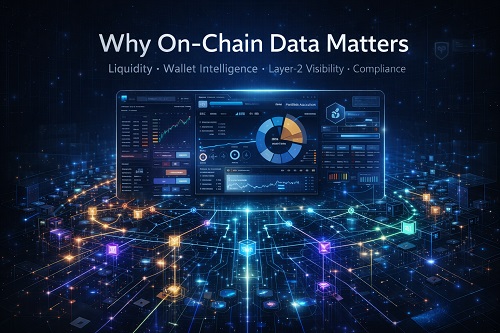
Traditional crypto portfolio insights were once dominated by price charts and surface-level volatility indicators. However, the maturation of digital asset markets has shifted analytical focus toward on-chain data and blockchain data analytics. Today, on-chain portfolio insights provide structural intelligence about capital flows, liquidity shifts, and investor behavior that cannot be derived from price action alone.
Understanding why on-chain data matters for crypto portfolio management requires recognizing its role as infrastructure. Unlike off-chain trading metrics, blockchain transaction data is immutable, transparent, and verifiable. This decentralized data transparency enables investors to build crypto portfolio insights grounded in real economic activity rather than speculative momentum.
The Structural Advantage of On-Chain Data in Portfolio Management
From Market Prices to Blockchain Transparency
Price-based analysis reflects sentiment; on-chain data reflects behavior. Blockchain transaction data reveals wallet transfers, exchange inflows, token flow analysis, and liquidity flows on-chain. These signals often precede price movements and provide deeper context for portfolio allocation decisions.
Network activity metrics such as transaction volume, active addresses, and token distribution patterns function as on-chain metrics that reveal structural health. Unlike centralized reporting systems, decentralized data transparency ensures that blockchain data analytics can be independently verified. This is why on-chain data matters for crypto portfolio management: it shifts portfolio insights from reactive observation to structural interpretation.
Address-Level Analytics and Wallet Activity Analysis
Address-level analytics and wallet activity analysis enable smart money tracking and early detection of whale movements crypto investors monitor closely. Large capital reallocations across exchanges or DeFi protocols frequently precede market shifts, making on-chain risk indicators invaluable for proactive allocation strategy.
Investor behavior analytics derived from on-chain metrics reveal accumulation zones, distribution phases, and crypto capital rotation cycles. Tracking whale movements for smarter investments becomes possible when blockchain data analytics are integrated directly into digital asset portfolio analytics systems. Using on-chain metrics for portfolio allocation improves strategic timing and risk calibration.
On-Chain Portfolio Insights as Risk Intelligence
Liquidity Flows and Token Flow Analysis
Liquidity flows on-chain provide forward-looking insight into market structure. Token flow analysis across centralized exchanges, decentralized exchanges, and staking protocols helps identify supply concentration and liquidity compression risks. These patterns often signal potential volatility before it materializes in price charts.
Crypto capital rotation between sectors, networks, or Layer-2 ecosystems reflects changing risk appetite. On-chain risk indicators derived from transaction flow analysis allow investors to adjust exposure dynamically. This demonstrates how on-chain data improves portfolio insights by transforming passive dashboards into active risk intelligence systems.
Real-Time On-Chain Monitoring for Institutional Investors
Institutional investors increasingly rely on real-time on-chain monitoring to manage exposure and regulatory risk. Digital asset portfolio analytics that integrate blockchain surveillance tools allow institutions to detect abnormal flows, concentration risks, and jurisdictional exposure.
On-chain risk indicators for institutional investors extend beyond volatility metrics. They include exchange inflow spikes, token distribution anomalies, and liquidity fragmentation across Layer-1 and Layer-2 environments. In regulated contexts, blockchain transparency becomes both a risk mitigation tool and a governance requirement.
The Rise of Layer-2 Scaling Solutions and Its Impact on On-Chain Analytics
The Rise of Layer-2 Scaling Solutions
The rise of layer-2 scaling solutions has transformed blockchain scalability and transaction throughput. Optimistic rollups data tracking and zk-rollups on-chain data introduce new execution layers that affect transaction flow analysis and liquidity visibility.
Layer-2 blockchain scalability reduces fees and increases transaction speed, but it also fragments data across networks. As a result, blockchain data analytics must adapt to maintain comprehensive on-chain portfolio insights.
Cross-Layer Portfolio Monitoring and Data Fragmentation
Cross-layer portfolio monitoring presents new analytical challenges. Layer-2 transaction visibility may not always mirror Layer-1 settlement data in real time, complicating token flow analysis and scaling solutions and liquidity flows assessment.
Rollups and portfolio analytics integration are therefore essential for accurate digital asset portfolio analytics. Cross-chain and layer-2 portfolio tracking require unified dashboards capable of aggregating liquidity flows on-chain across execution layers. Understanding how layer-2 scaling solutions affect on-chain analytics is now central to comprehensive crypto portfolio insights.
Impact of Regulations on Crypto and On-Chain Portfolio Strategy
Impact of Regulations on Crypto Markets
The impact of regulations on crypto markets directly influences portfolio strategy. Regulatory risk in digital assets affects liquidity conditions, exchange accessibility, and capital mobility. Institutional crypto regulation frameworks introduce compliance thresholds that reshape market participation.
Jurisdictional risk in crypto portfolios must be evaluated alongside liquidity flows and capital concentration. Impact of regulations on crypto portfolio strategy becomes particularly significant during periods of enforcement changes or market structure adjustments.
On-Chain Compliance Tracking and Crypto AML Monitoring
Crypto AML monitoring and on-chain compliance tracking are increasingly integrated into blockchain data analytics systems. Blockchain surveillance tools allow institutions to detect sanctioned addresses, high-risk wallet interactions, and cross-border transaction exposure.
On-chain compliance tracking enhances transparency without relying solely on centralized disclosures. Integrating regulatory-aware analytics into portfolio dashboards ensures that crypto portfolio insights reflect not only market dynamics but also evolving legal frameworks.
Integrating On-Chain Data into Portfolio Intelligence Platforms
On-Chain Analytics Platforms and Dashboard Architecture
On-chain analytics platforms differ fundamentally from traditional exchange dashboards. Integrating blockchain data analytics into portfolio dashboards transforms raw blockchain transaction data into actionable crypto market intelligence.
Unified digital asset portfolio analytics systems consolidate wallet activity analysis, liquidity flows on-chain, and network activity metrics into coherent interfaces. Real-time on-chain monitoring embedded within dashboard architecture supports data-driven decision-making rather than speculative reaction.
From Data Aggregation to Allocation Intelligence
Modern on-chain portfolio insights go beyond visualization. Using on-chain metrics for portfolio allocation enables structured weighting strategies informed by smart money tracking and crypto capital rotation analysis.
Blockchain data analytics increasingly function as allocation engines. Investor behavior analytics combined with liquidity modeling allow portfolios to shift exposure proactively. This transition from aggregation to allocation intelligence represents a fundamental evolution in crypto portfolio insights.
Institutional Adoption of On-Chain Portfolio Insights
Institutional Crypto Portfolios and Advanced Data Requirements
Institutional crypto portfolios require institutional-grade blockchain data analytics. On-chain risk indicators for institutional investors must integrate liquidity monitoring, compliance oversight, and multi-layer exposure tracking.
Real-time monitoring in regulated environments ensures transparency and auditability. Institutional adoption depends on reliable digital asset portfolio analytics capable of reconciling on-chain data with governance frameworks.
Blockchain Transparency as Governance Infrastructure
Decentralized data transparency strengthens institutional reporting and oversight. Blockchain transparency enables verifiable audit trails that enhance portfolio governance.
Bridging crypto market intelligence with regulatory frameworks requires structured on-chain compliance tracking. For institutions, on-chain portfolio insights function as governance infrastructure rather than optional analytics.
The Future of On-Chain Portfolio Insights
Cross-Chain, Cross-Layer Intelligence Systems
The future of on-chain portfolio insights lies in unified cross-chain and cross-layer intelligence systems. Advanced rollups and portfolio analytics integration will provide seamless token flow analysis across networks.
Real-time token flow analysis supported by network activity metrics will enable predictive liquidity modeling. As Layer-2 scaling solutions proliferate, comprehensive blockchain data analytics will require interoperable aggregation frameworks.
From Reactive Analysis to Predictive Capital Allocation
Blockchain data analytics is evolving from reactive monitoring to predictive capital allocation modeling. Investor behavior analytics, smart money tracking, and liquidity flow interpretation form the foundation of forward-looking crypto market intelligence.
Why on-chain data matters for crypto portfolio management becomes clearer as predictive systems replace backward-looking metrics. How on-chain data improves portfolio insights ultimately depends on its integration into structured allocation architecture.
Conclusion: On-Chain Data as the Foundation of Modern Portfolio Intelligence
On-chain data has become the foundation of modern crypto portfolio insights. From liquidity flows on-chain and wallet activity analysis to the rise of layer-2 scaling solutions and the impact of regulations on crypto, blockchain data analytics now shapes strategic allocation decisions.
For investors and institutions seeking deeper portfolio intelligence, integrating real-time on-chain monitoring, cross-layer visibility, and compliance-aware analytics is no longer optional. Harukuro enables this transition by transforming raw blockchain data analytics into structured, institutional-grade portfolio insights. If you aim to elevate your crypto portfolio strategy beyond surface metrics and build intelligence-driven allocation models, explore how Harukuro can help you operationalize on-chain data into actionable portfolio architecture.